Good evening. Here is what matters in AI today, and how to put it to work.
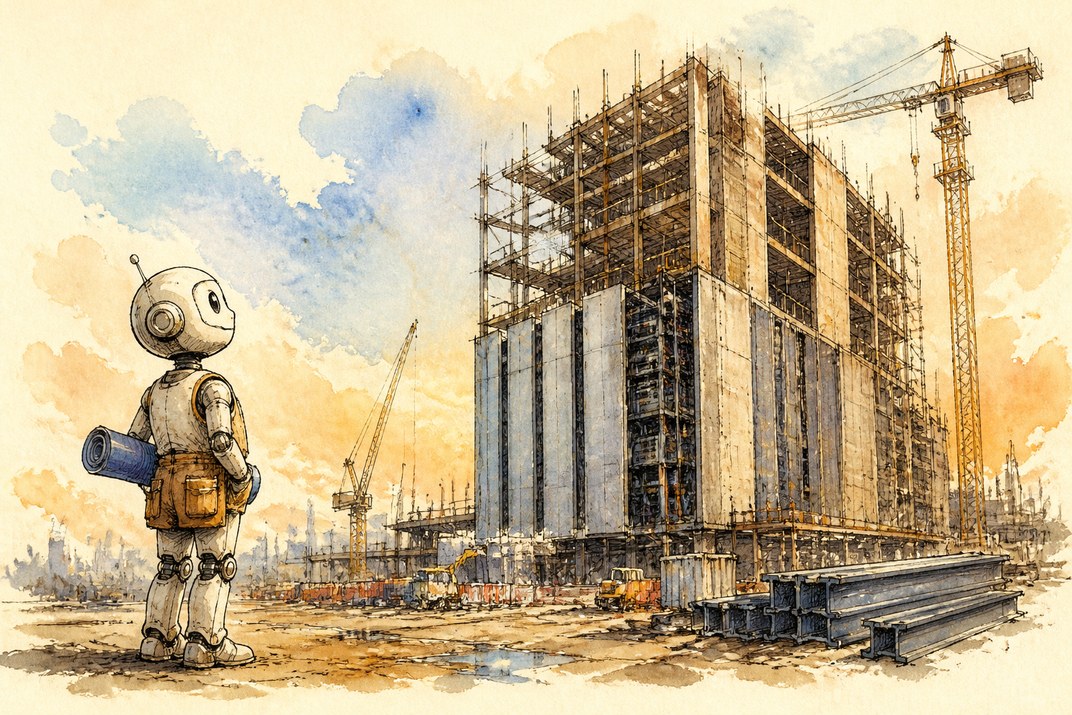
We see Nvidia's governance crisis, stalling data center builds, and rising AI product regulation converging into a single message: the AI buildout is hitting real limits.
~3 min read · last 12 hours
In today's issue
01
AI data center construction is stalling, and neoclouds are feeling the pressure
02
S&P weighs Nvidia credit downgrade over governance and 'key man' risks
03
Jensen Huang broke Nvidia's code of conduct, and employees may not forget it
04
Claude artifacts can now be installed as desktop apps on Windows and Mac
05
Gen Z is the least interested in AI at work, and it is not even close
Main story
AI data center construction is stalling, and neoclouds are feeling the pressure
Nvidia will not backstop a data center until it is nearly ready to run, leaving neocloud operators facing construction delays and more expensive debt.
Why it matters: Teams planning GPU capacity on 12-to-18-month horizons need to account for slippage: the assumption that supply will simply appear on schedule is no longer safe.
What to watch next: Watch whether other GPU suppliers or hyperscalers step in to offer the backstop guarantees Nvidia is withdrawing, as that would either relieve the neocloud squeeze or accelerate consolidation toward a smaller number of well-capitalised players.
We are watching a cluster of signals that together suggest the AI buildout is running into real-world friction, from Nvidia's leadership risks to the physical difficulty of getting data centers into the ground.
US accounts whose private chat data is included in Character.AI's proposed bankruptcy sale · TechCrunch
Watch · On the feeds
You had us at Deployed
OpenAI
Train Task-Specific Models with CoreWeave Model Distillation
CoreWeave
The Signal
The AI infrastructure story is no longer just about who can spend the most. This week, we are seeing the supply chain tighten from multiple directions at once: Nvidia's leadership credibility is under formal scrutiny, its own policies are discouraging early-stage data center commitments, and the cost of capital for neocloud operators is rising. At the same time, regulators and users are applying friction at the product layer, from New York banning AI toys for children to Gen Z workers rejecting AI at work. For engineering and product leaders, the practical implication is the same in both directions: build your roadmap around constraints, not the assumption of frictionless growth.
All the best, the KYFEX team
Quick hits
AI infrastructure: governance cracks and construction headwinds
S&P weighs Nvidia credit downgrade over governance and 'key man' risks
S&P may cut Nvidia's rating to AA-, citing concerns about corporate governance and the company's dependence on Jensen Huang.
Why it matters: A credit downgrade would raise Nvidia's borrowing costs and signal to institutional buyers that concentration risk at the top of the AI supply chain is no longer theoretical.
Jensen Huang broke Nvidia's code of conduct, and employees may not forget it
Nvidia's own code of conduct was violated by its CEO, raising questions about whether cultural norms at the company can survive its hypergrowth.
Why it matters: Governance failures at the top of a dominant supplier ripple outward: customers, partners, and regulators all reassess their exposure when leadership accountability breaks down.
AI in products and society: new capabilities, real limits
A wave of new AI product moves this week shows the technology pushing into new form factors and markets, while regulators, users, and safety researchers are pushing back with equal force.
Claude artifacts can now be installed as desktop apps on Windows and Mac
Anthropic's new 'install as app' feature lets users turn Claude-generated artifacts into standalone desktop applications, with some limitations.
Why it matters: This lowers the barrier for non-engineers to ship lightweight internal tools, which changes the conversation about who owns AI-assisted software delivery in an organisation.
Gen Z is the least interested in AI at work, and it is not even close
A recent survey finds younger workers are the most skeptical about AI's usefulness on the job, contradicting the assumption that digital natives will be AI adoption's fastest adopters.
Why it matters: Change management strategies built around the premise that younger employees will self-serve AI adoption need to be revisited: skepticism is not correlated with age the way most rollout plans assume.
LLMs aren't built to make predictions on tabular data. In this course, you'll learn how tabular foundation models use in-context learning to make predictions on new datasets without training a new...
This course will teach you to build robots with using LeRobot
Hugging Face · Free
Put it to work
Try this today
Assess AI adoption blockers in your team or organisation
I am an engineering or product leader trying to understand why AI adoption is slower than expected in my organisation. Here is what I know about my team's current AI usage and attitudes: [paste your observations or survey data here]. Identify the top three blockers that are most likely driving low adoption, distinguish between blockers that are about trust, usefulness, or workflow fit, and suggest one concrete action I can take in the next two weeks to address each blocker. Be specific and avoid generic advice.
Why it helps: Today's finding that Gen Z workers are the least interested in AI at work is a reminder that adoption assumptions are often wrong: this prompt helps leaders diagnose the real friction before designing a rollout.
Before you ship it
The risk
The Character.AI bankruptcy case shows that sensitive user data collected by an AI product does not disappear when the company does: it becomes a transferable asset that can be sold to unknown third parties, including data about minors.
Do this
Audit your AI product's data retention and portability policies now, and ensure your privacy notices explicitly address what happens to user data in an insolvency or acquisition scenario.
Ready to ship AI, not just read about it?
KYFEX designs and builds production AI for teams that need it working, not just demoed. Tell us what you're working on and we'll bring the engineering.