Good evening. Here is what matters in AI today, and how to put it to work.
AI is simultaneously breaking security timelines, straining governance frameworks, and reshaping business models: every leader needs a response on all three fronts.
~3 min read · last 12 hours
In today's issue
01
AI is turbocharging the vulnerability-to-exploit cycle
02
Signal restricts screenshots to fight AI-powered surveillance
03
UN diplomats leave Geneva without rules on autonomous weapons
04
Anthropic goes public: can safety and commercial scale coexist?
05
Nvidia: record earnings, but tech leaders want Jensen Huang back in the room
Main story
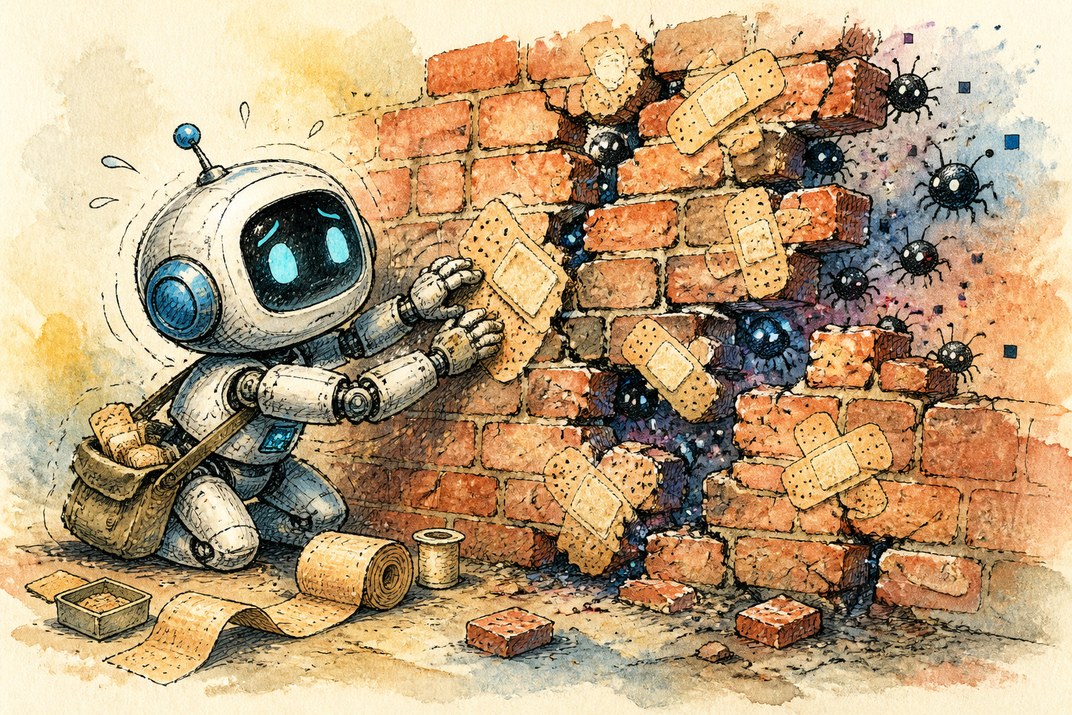
AI is turbocharging the vulnerability-to-exploit cycle
Attackers are using AI to race through newly discovered vulnerabilities faster than companies can patch, pushing internet outages into a new, more frequent era.
Why it matters: If your incident-response playbook was written for a pre-AI threat pace, it is already out of date: review your mean-time-to-patch targets now.
What to watch next: Watch whether insurers and regulators begin tying cyber-insurance premiums or compliance requirements to AI-assisted patch velocity: that would be the clearest market signal that the outage era is forcing structural change.
Three stories this week converge on the same uncomfortable truth: AI is accelerating both the attack surface and the governance vacuum, forcing organizations to move faster than their risk frameworks were built to handle.
Today's items collectively signal that AI has moved from a capability story to an infrastructure-stress story. The attack surface is expanding faster than defenses can adapt, international governance is stalled, and the business models funding AI development are facing their first serious public-market stress tests. For engineering and product leaders, the practical implication is clear: risk frameworks, procurement decisions, and content policies all need revisiting on a shorter cycle than most organizations planned for.
All the best, the KYFEX team
Quick hits
AI pressure on security, privacy, and governance
Signal restricts screenshots to fight AI-powered surveillance
Signal is locking down screenshot capability on Android and iOS, citing AI surveillance as an existential threat to private messaging.
Why it matters: This signals that even privacy-first platforms now treat AI-assisted screen scraping as a first-class threat model, a cue for any team handling sensitive communications.
UN diplomats leave Geneva without rules on autonomous weapons
A UN meeting on killer robots ended with agreement only to "start discussions," leaving autonomous weapons effectively unregulated at the international level.
Why it matters: The governance gap at the international level matters for defense and dual-use AI vendors: no binding framework is coming soon, so product-level ethics reviews carry more weight than ever.
From Nvidia's earnings to Anthropic's IPO to actors licensing their faces, the week's business stories all circle the same question: who actually captures value as AI scales, and at what cost?
Anthropic goes public: can safety and commercial scale coexist?
Anthropic's Nasdaq debut puts its safety-first positioning under investor scrutiny for the first time, raising hard questions about whether the lab can sustain its research mission under public-market pressure.
Why it matters: For enterprise buyers, Anthropic's IPO is a useful forcing function: assess supplier concentration risk and watch whether post-IPO roadmap decisions favor capability speed over safety investment.
Nvidia: record earnings, but tech leaders want Jensen Huang back in the room
Nvidia's latest results paint a booming chip business, yet prominent tech executives are publicly calling for more direct engagement from CEO Jensen Huang, revealing a gap between financial performance and strategic confidence.
Why it matters: Nvidia's supply-demand dynamics still set the pace for every AI infrastructure roadmap, so any signal of strategic drift at the top deserves a close read before your next compute procurement cycle.
This course will teach you about integrating AI models your game and using AI tools in your game development workflow
Hugging Face · Free
Put it to work
Try this today
Audit your incident-response plan for AI-accelerated threats
You are a senior security architect. Review the incident-response plan pasted below and identify every step that assumes a human-paced threat timeline (days to weeks). For each such step, suggest a concrete change that would hold up when attackers are using AI to exploit vulnerabilities within hours of disclosure. Output a numbered list of findings, each with: the original assumption, the risk it creates today, and the recommended change.
[PASTE YOUR INCIDENT RESPONSE PLAN HERE]
Why it helps: With AI compressing the vulnerability-to-exploit window, most IR plans have hidden assumptions baked in that no longer hold: this prompt surfaces them before an outage does.
Before you ship it
The risk
AI-assisted surveillance tools can now extract sensitive information from screenshots and screen recordings at scale, turning any unguarded communication channel into a data-leakage vector.
Do this
Audit which internal tools and communication platforms allow unrestricted screenshots or screen capture, then enforce technical controls or policy restrictions on any that handle sensitive data, before an attacker does it for you.
Ready to ship AI, not just read about it?
KYFEX designs and builds production AI for teams that need it working, not just demoed. Tell us what you're working on and we'll bring the engineering.