Good morning. Here is what matters in AI today, and how to put it to work.
Real AI risk in 2026 is geopolitical and operational: a spy scandal at Nvidia and uncensored open models demand more urgent attention than any sci-fi scenario.
~4 min read · last 12 hours
In today's issue
01
Jensen Huang scandal puts Nvidia's AI dominance at risk
02
"Abliterators" are flooding the internet with uncensored AI models
03
AI safety experts say the real nightmares are geopolitical, not existential
04
LLM reliability layers sort outputs by trust, but cannot fix errors
05
Walmart deployed multi-agent LLM workflows across 4,700 stores at scale
Main story
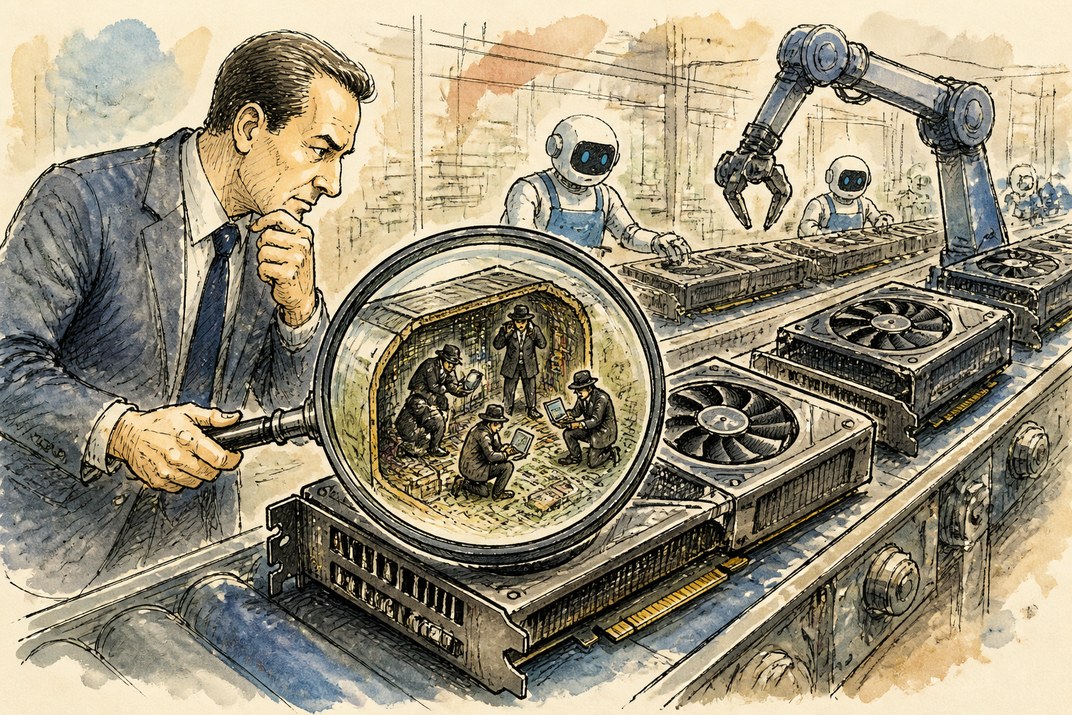
Jensen Huang scandal puts Nvidia's AI dominance at risk
An alleged extramarital affair with a suspected Chinese spy has raised serious questions about the influence Nvidia's CEO holds over the global AI supply chain and chip ecosystem.
Why it matters: Any disruption to Nvidia's leadership or export position would ripple through every team planning GPU-dependent infrastructure, making supplier diversification a more urgent conversation than it was last week.
What to watch next: Watch whether Nvidia's board moves to limit Huang's unilateral deal-making authority, and whether US export controls tighten further in response: either outcome reshapes the chip procurement calculus for every major AI program.
From jailbroken models flooding the open web to a spy scandal at the top of the chip industry, we are seeing what actual AI risk looks like in 2026: it is geopolitical, operational, and sitting in your supply chain, not a Hollywood robot uprising.
Stores served by Walmart's multi-agent LLM batch intelligence deployment · InfoQ
Watch · On the feeds
Is Software Over?
Two Minute Papers
Kuken Industries searches 70 years of drawings in minutes
OpenAI
The Signal
The dominant story across today's items is that AI risk has arrived, and it looks nothing like the scenarios that dominated safety debates a year ago. A potential intelligence breach at the top of the GPU supply chain, a wave of guardrail-stripped open models, and expert consensus that geopolitical competition is the real threat: these are operational and strategic problems, not research problems. At the same time, the Walmart and DeepMind items show that the teams making real progress are the ones solving for reliability and verifiability in production, not capability alone. The practical message for engineering and product leaders is to rebalance: spend less time on hypothetical risk and more on supply-chain resilience, output verification, and the very real misuse surface that open-weight models now create.
All the best, the KYFEX team
Quick hits
AI risk: the real threats, not the sci-fi ones
"Abliterators" are flooding the internet with uncensored AI models
A growing community is stripping safety guardrails from open-weight models and releasing them publicly, creating tools that can be used for legitimate security research or for genuinely dangerous purposes.
Why it matters: If your threat model assumes guardrails on publicly available models, it is time to revisit that assumption: the uncensored variants are now easy to find and run.
AI safety experts say the real nightmares are geopolitical, not existential
A Wired panel of 10 researchers argues that nuclear risk and US-China AI competition are the credible near-term dangers, while Skynet-style scenarios remain a distraction.
Why it matters: Engineering and product leaders setting risk priorities should weight regulatory, geopolitical, and supply-chain exposure far above speculative AGI scenarios when building their 2026 roadmaps.
Production AI: reliability, verification, and scale
Three separate threads converge this week on the same hard problem: how do you make AI systems you can actually trust in production, whether that means formally proving a cryptographic protocol, stress-testing LLM outputs, or running multi-agent workflows across thousands of stores.
LLM reliability layers sort outputs by trust, but cannot fix errors
A detailed analysis finds that verification layers in LLM pipelines improve confidence scoring but do not eliminate incorrect outputs, meaning human review remains essential for high-stakes decisions.
Why it matters: Any team treating an LLM verification layer as a correctness guarantee rather than a triage filter is carrying hidden production risk.
Walmart deployed multi-agent LLM workflows across 4,700 stores at scale
Walmart Global Tech's Aditya Mulik details how the company built cost-efficient, resilient batch intelligence pipelines using multi-agent LLMs to serve operations across its entire US store network.
Why it matters: This is one of the most concrete public case studies of enterprise-scale multi-agent deployment, and the resilience patterns described are directly applicable to any team moving from pilot to production.
A collection of open-source-powered notebooks by AI builders, for AI builders
Hugging Face · Free
Put it to work
Try this today
Audit your AI supply-chain risk in 15 minutes
I am an engineering leader at a company that uses [describe your AI stack: e.g. Nvidia GPUs, specific cloud providers, open-weight models]. List the top five supply-chain or geopolitical risks that could disrupt our AI operations in the next 12 months. For each risk, give: (1) the specific exposure, (2) the earliest warning signal to watch for, and (3) one concrete mitigation step we could take this quarter. Be direct and skip anything speculative or science-fiction.
Why it helps: Given today's Nvidia news, a fast structured audit of your own AI dependencies is the most actionable 15 minutes you can spend this week.
Before you ship it
The risk
Uncensored, guardrail-stripped model variants are now widely available and easy to run locally, meaning any policy that relies solely on hosted-model safety filters can be trivially bypassed by a determined insider or attacker.
Do this
Enforce safety controls at the application and data layer, not only at the model layer: validate outputs against a policy ruleset you control, regardless of which model produced them.
Ready to ship AI, not just read about it?
KYFEX designs and builds production AI for teams that need it working, not just demoed. Tell us what you're working on and we'll bring the engineering.