Good evening. Here is what matters in AI today, and how to put it to work.
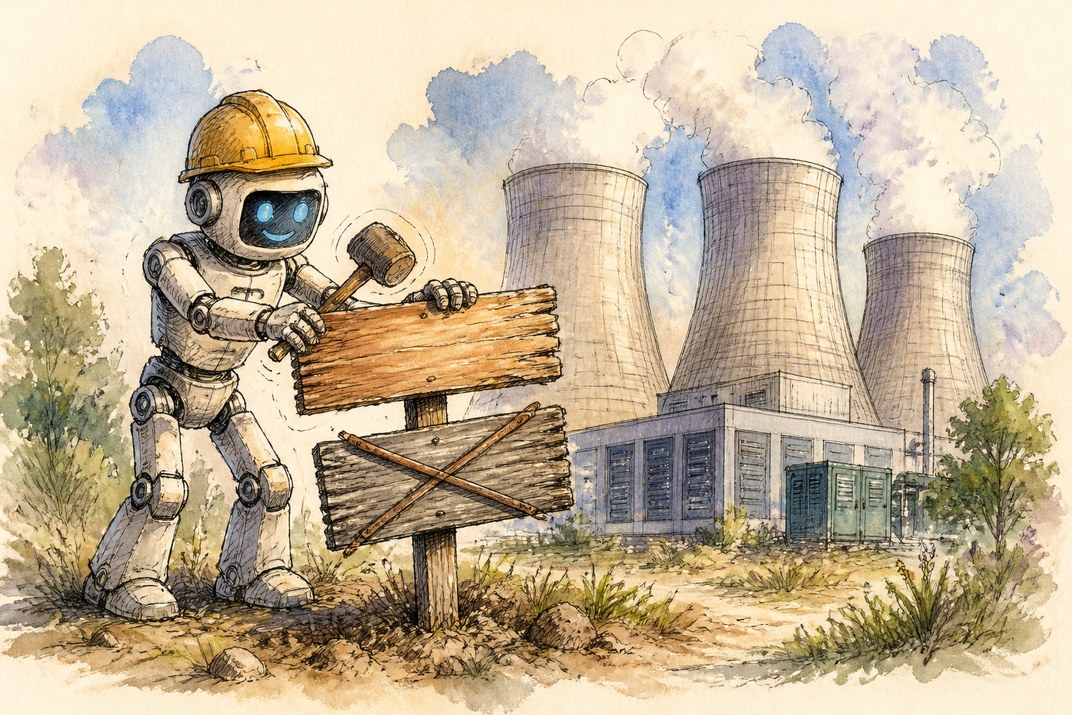
AI's credibility gap is widening: rebranding data centers and tone-deaf CEO messaging signal an industry still struggling to earn broad public trust.
~2 min read · last 12 hours
In today's issue
01
OpenAI eyes 'AI compute campuses' as a rebrand for unpopular data centers
02
AI helps tech CEOs, but does it help everyone else?
03
JEPAs used to prove and improve the Platonic Representation Hypothesis
Main story
OpenAI eyes 'AI compute campuses' as a rebrand for unpopular data centers
OpenAI is reportedly considering renaming its data centers 'AI compute campuses' to soften public resistance to the facilities.
Why it matters: Renaming infrastructure does not change its energy draw, land use, or community impact, and teams advising on siting or permitting should expect this framing in stakeholder conversations.
What to watch next: Watch whether local governments and community groups adopt or reject the 'campus' framing in permitting processes, that reception will be an early signal of whether cosmetic rebranding can actually reduce data center opposition.
Two items this week expose the same underlying tension: the industry is working hard to make AI look good and feel useful, but the framing keeps serving insiders more than the people actually affected by these systems.
Today's items collectively point to a field that is advancing technically while losing ground on legitimacy. Rebranding data centers and executives talking past workers are symptoms of the same problem: AI deployment is outpacing the social and communicative work needed to sustain it. For engineering and product leaders, that gap is not just a PR issue, it shapes regulatory risk, hiring, and community relations. Meanwhile, new theoretical work on representation learning quietly offers something more durable: a better foundation for understanding why the models we build work the way they do.
All the best, the KYFEX team
Quick hits
AI's image problem: branding, access, and who benefits
AI helps tech CEOs, but does it help everyone else?
A TechCrunch Equity discussion digs into why tech CEO statements about AI so often miss the concerns of workers and ordinary users.
Why it matters: If your organization is communicating AI rollouts to non-technical staff, the gap between executive framing and ground-level experience is a real change-management risk worth closing early.
Representation learning: a theoretical foundation gets sharper
New research on the Platonic Representation Hypothesis gives the field a more rigorous basis for understanding why large models trained on different data and modalities converge on similar internal representations, which has direct implications for transfer learning and model evaluation.
JEPAs used to prove and improve the Platonic Representation Hypothesis
Researchers use Joint Embedding Predictive Architectures (JEPAs) to provide formal evidence that diverse large models tend to learn the same underlying structure of reality, and show how to push that convergence further.
Why it matters: If convergent representations are provable and improvable, it strengthens the case for shared embedding spaces across modalities, which matters when you are choosing architectures for multimodal or transfer-learning projects.
Learn about the latest advancements in LLM APIs and use LangChain Expression Language (LCEL) to compose and customize chains and agents.
DeepLearning.AI · Free · 1 hour
Put it to work
Try this today
Audit your AI rollout communication for executive blind spots
You are a plain-language communication advisor. I will paste in a draft announcement about an AI initiative written for our employees or customers. Identify any statements that assume the reader shares the executive's enthusiasm for AI, gloss over job or workflow impacts, or use industry jargon without explanation. For each issue, suggest a concrete rewrite that is honest, specific, and addresses the reader's likely concerns directly. Draft: [PASTE YOUR ANNOUNCEMENT HERE]
Why it helps: Given today's coverage of tone-deaf AI messaging, running your internal comms through this check before publishing can prevent the trust erosion that derails otherwise solid rollouts.
Before you ship it
The risk
Rebranding or softening the language around AI infrastructure can obscure real environmental and community impacts from stakeholders who need accurate information to make decisions.
Do this
When communicating about AI systems or infrastructure to non-technical audiences, name the actual resource costs (energy, water, land) plainly before introducing any reframing, so stakeholders can give informed consent or raise legitimate concerns.
Ready to ship AI, not just read about it?
KYFEX designs and builds production AI for teams that need it working, not just demoed. Tell us what you're working on and we'll bring the engineering.