Good evening. Here is what matters in AI today, and how to put it to work.
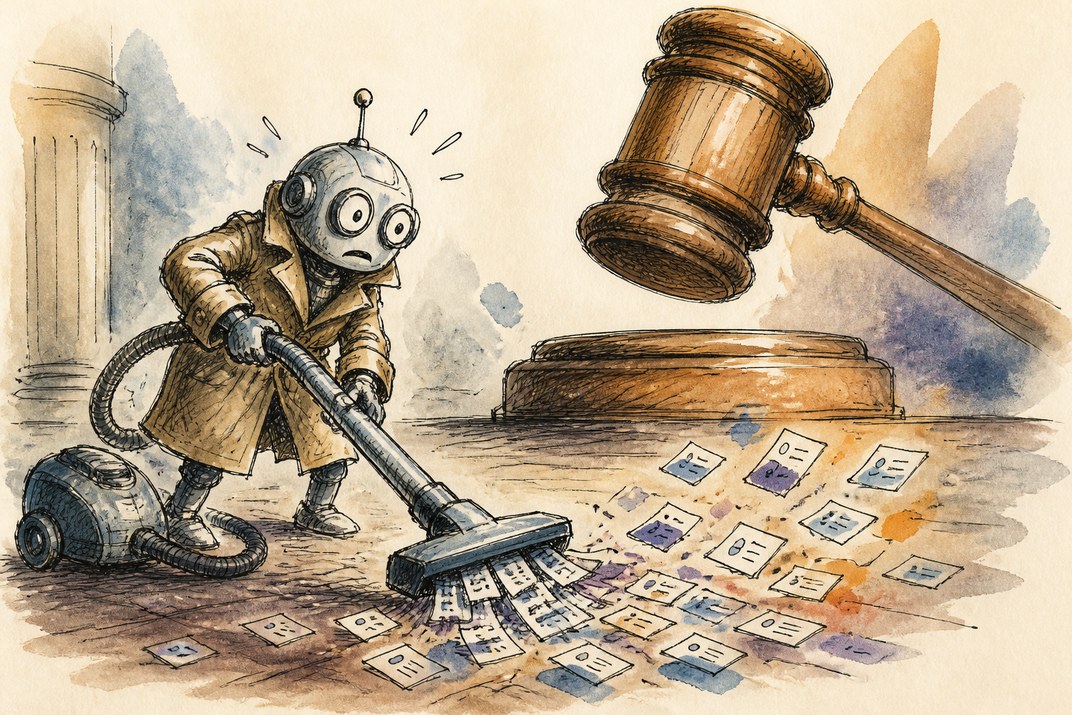
We see AI ambition hitting friction on two fronts today: Apple's deliberate restraint and OpenAI's trimmed funding target signal that uncritical AI expansion is under pressure.
~3 min read · last 12 hours
In today's issue
01
New infostealer malware uses AI to automatically profile victims
02
Apple CEO: we don't want to ship AI for AI's sake
03
OpenAI quietly lowers its latest funding target
04
NAACP lawsuit over xAI data center pollution moves forward
Main story
New infostealer malware uses AI to automatically profile victims
"Volta-Autodoxer" uses AI tools to scrape and correlate stolen data, from login credentials and credit card numbers to app-session tokens, building detailed dossiers on victims with minimal attacker effort.
Why it matters: AI-accelerated malware raises the blast radius of a single credential leak, so organizations should treat session-token hygiene and least-privilege access as urgent, not routine, hygiene tasks.
What to watch next: Watch whether other infostealer variants adopt similar AI-driven correlation techniques, as that would signal a broader commoditization of automated victim profiling and force a step-change in how organizations respond to credential breaches.
Two stories this week show that AI's externalities are moving from abstract risk to active legal and criminal exposure, and both carry direct implications for how organizations govern their AI deployments.
Today's items collectively point to a maturing, more contested AI landscape. Strategic restraint is becoming a defensible position, investor appetite is showing real limits, and AI's negative externalities, environmental and criminal, are attracting legal and regulatory teeth. For engineering and product leaders, this means the "ship fast, justify later" posture is increasingly expensive: both the legal exposure from infrastructure choices and the security exposure from AI-powered attacks demand proactive governance, not reactive cleanup.
All the best, the KYFEX team
“Named "Volta-Autodoxer," the recently uncovered malware uses AI tools to collect troves of data about victims, from login credentials and credit card numbers to Discord sessions and UberEats receipts.”
WIRED
Quick hits
AI strategy: deliberate restraint vs. growth pressure
We see two contrasting signals on AI ambition today: Apple publicly pumping the brakes on AI-for-its-own-sake while OpenAI quietly trims its latest funding target, suggesting that the era of uncritical AI expansion is running into both philosophical and financial friction.
Apple CEO: we don't want to ship AI for AI's sake
Apple's CEO defended the company's measured AI pace, framing restraint as a deliberate product philosophy rather than a capability gap.
Why it matters: For teams benchmarking their own AI roadmaps against Big Tech, this is a useful reminder that shipping fewer, more integrated AI features can be a credible strategy, not a concession.
OpenAI's current fundraising round is reportedly falling short of its original target, a notable signal given the company's recent valuation trajectory.
Why it matters: If even OpenAI faces investor hesitation, budget owners should expect tighter scrutiny on AI spend and prepare clearer ROI cases for new initiatives.
AI's real-world costs: pollution, malware, and accountability
NAACP lawsuit over xAI data center pollution moves forward
A federal judge allowed an NAACP suit against xAI to proceed, alleging the company's data center violates the Clean Air Act by exposing a nearby community to harmful emissions.
Why it matters: AI infrastructure is no longer insulated from environmental litigation, and teams evaluating data center partnerships or build-vs-buy decisions need to factor regulatory and reputational exposure into those choices.
Integrate data governance into your agent's workflow to ensure it handles data safely, securely, and accurately.
DeepLearning.AI · Free · 1 hour
Put it to work
Try this today
Audit your team's session-token and credential exposure
You are a security-focused AI assistant. Given the following list of services and integrations our team uses, identify which ones store long-lived session tokens, OAuth credentials, or API keys that could be harvested by infostealer malware. For each, suggest the single most impactful mitigation: token rotation policy, scope reduction, or MFA enforcement. Services: [paste your list here].
Why it helps: With AI-powered malware now correlating stolen tokens across services automatically, knowing your highest-risk integrations before an incident is far cheaper than triaging after one.
Before you ship it
The risk
AI-accelerated infostealers can silently correlate session tokens, app receipts, and credentials into a complete victim profile before any alert fires, dramatically compressing the window between compromise and damage.
Do this
Scope every service token to the minimum required permissions and enforce short expiry windows, so that a harvested token yields an attacker the least possible access and the shortest possible window to act.
Ready to ship AI, not just read about it?
KYFEX designs and builds production AI for teams that need it working, not just demoed. Tell us what you're working on and we'll bring the engineering.