Good morning. Here is what matters in AI today, and how to put it to work.
We see AI hollowing out mid-career engineering roles while Amazon bets its $1T future on cloud AI, two forces that will reshape every team's roadmap.
~4 min read · last 12 hours
In today's issue
01
AI is hollowing out mid-level engineering roles, empirical research shows
02
InfoQ AI, ML and Data Engineering Trends Report 2026: what the field looks like now
03
InfoQ podcast: editorial team unpacks the 2026 AI and ML trends report
04
Amazon CEO: AWS will hit $1T revenue, but capex spending must come first
05
Wikimedia draws a legal line: LLM training yes, content regurgitation no
Main story
AI is hollowing out mid-level engineering roles, empirical research shows
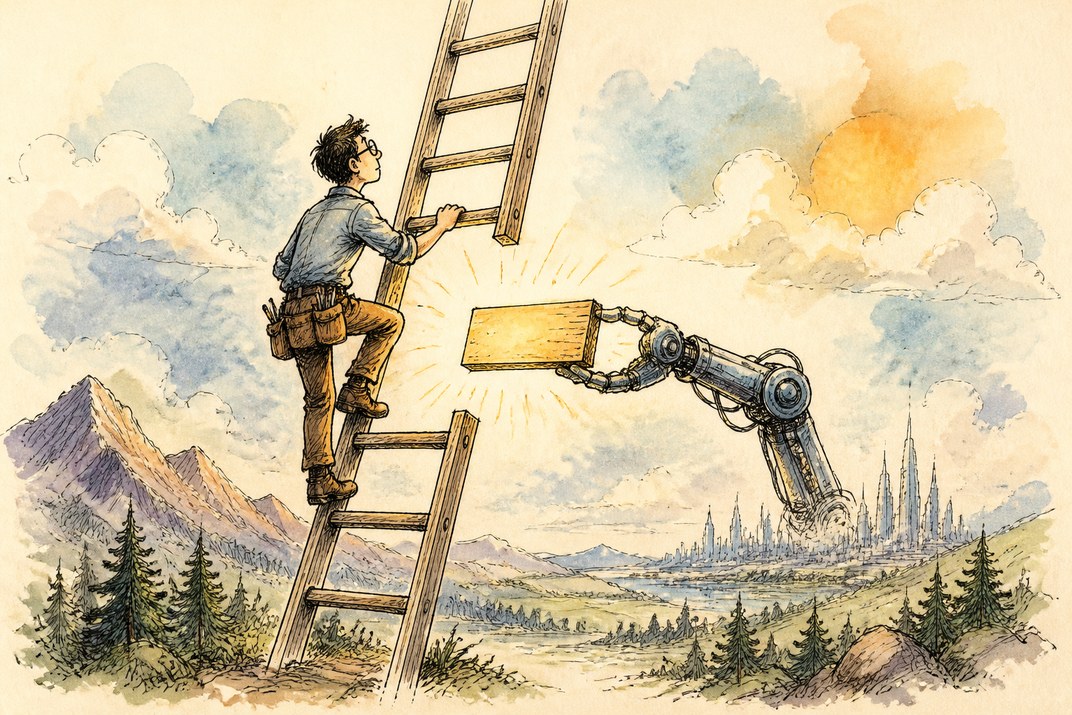
Alasdair Allan draws on METR and Anthropic research to argue that AI coding tools are removing the intermediate rungs of the engineering career ladder, leaving a gap between junior and senior that teams have not yet figured out how to bridge.
Why it matters: If your org is relying on AI-assisted junior developers to grow into seniors, this research is a direct challenge to that assumption and worth stress-testing your pipeline against now.
What to watch next: Watch whether enterprise engineering orgs respond by restructuring mentorship and promotion criteria, or by quietly accepting a permanent skills gap at the mid-level.
We see a consistent signal today: AI is not just changing what engineers build, it is changing what skills and roles exist, and the industry's own trend-watchers are mapping exactly where that leaves teams in 2026.
Today's items collectively point to an industry in structural transition, not just a technology upgrade cycle. AI is compressing the career ladder engineers depend on for skill development, while the capital pouring into cloud AI infrastructure locks in a competitive dynamic that will be hard to reverse. Legal frameworks around training data are also hardening, meaning product and compliance decisions made today will be tested in court sooner than most teams expect. For engineering and product leaders, the practical question is no longer "should we adopt AI" but "what does our team look like in three years if we do, and what are our legal guardrails."
All the best, the KYFEX team
Quick hits
AI's reshaping of engineering careers and industry trends
InfoQ AI, ML and Data Engineering Trends Report 2026: what the field looks like now
InfoQ's annual trends report maps the current state of AI, ML, and data engineering, covering which technologies are crossing into mainstream adoption and which remain early-stage.
Why it matters: Use this as a calibration tool: if your stack diverges sharply from the adoption curve here, you either have a competitive edge or a hiring and tooling debt problem worth naming.
InfoQ podcast: editorial team unpacks the 2026 AI and ML trends report
The InfoQ editorial team discusses the key findings from their 2026 trends report, adding context on what the data means for practitioners making tooling and architecture decisions.
Why it matters: The audio format surfaces the reasoning behind the rankings, which is often more useful than the rankings themselves for making the case internally.
AI infrastructure bets and legal guardrails taking shape
Two stories this week sit at the boundary between capital commitment and legal risk: Amazon is placing a historic infrastructure bet on AI cloud dominance, while Wikimedia is trying to draw a legal line that protects training data without blessing wholesale content regurgitation.
Amazon CEO: AWS will hit $1T revenue, but capex spending must come first
Andy Jassy says Amazon's ambition is to become the first $1 trillion revenue business, with AI cloud infrastructure as the engine, and that requires continued heavy capital expenditure.
Why it matters: For teams evaluating cloud commitments, this signals AWS is betting its long-term positioning on AI capacity, which means pricing, availability, and feature velocity on that platform will be shaped by this race for years.
Wikimedia draws a legal line: LLM training yes, content regurgitation no
The Wikimedia Foundation is intervening in landmark AI copyright cases, arguing courts should protect LLMs that train on copyrighted content but not chatbots that reproduce that content verbatim to users.
Why it matters: This distinction, if adopted by courts, would directly affect how AI products are built: training pipelines may stay legal while output filtering becomes a compliance requirement.
Get an introduction to tuning and evaluating LLMs using Reinforcement Learning from Human Feedback (RLHF) and fine-tune the Llama 2 model.
DeepLearning.AI · Free · 1 hour
Put it to work
Try this today
Audit your engineering career ladder for AI-created gaps
You are an engineering org designer. I will describe our current career ladder levels and the tasks AI tools now handle automatically. For each level, identify: (1) which growth tasks have been automated away, (2) what new skills or responsibilities should fill that gap, and (3) whether the level still makes sense as a distinct role. Here is our current ladder: [paste your levels and key responsibilities]. Here are the AI tools our team uses daily: [list tools].
Why it helps: The METR and Anthropic research discussed today makes this audit urgent: teams that do not actively redesign their ladders risk losing the pipeline that turns juniors into seniors.
KYFEX Playbook: Workflow of the week
Map your team's AI adoption maturity in 30 minutes
1
Pull your InfoQ 2026 Trends Report findings (item i f6e2d91494d6) and list the five technologies rated 'early majority' or higher.
▼
2
For each technology, ask every team lead to rate your org's current use on a 1-to-5 scale: 1 = unaware, 3 = experimenting, 5 = in production.
▼
3
Collect ratings in a shared spreadsheet and average them per technology.
▼
4
Flag any technology where the industry is at 'early majority' but your average score is below 3: these are your adoption gaps.
▼
5
For each gap, assign one owner to produce a one-page options brief within two weeks: adopt, defer with rationale, or explicitly skip.
▼
6
Review the full map in your next engineering leadership sync and update your roadmap accordingly.
Before you ship it
The risk
AI coding assistants that remove intermediate engineering tasks can also remove the feedback loops junior engineers rely on to catch their own errors, meaning mistakes surface later and at higher cost.
Do this
Require human code review at every level regardless of AI assistance, and explicitly preserve at least one complex, unassisted task per sprint for junior engineers to build judgment on.
Ready to ship AI, not just read about it?
KYFEX designs and builds production AI for teams that need it working, not just demoed. Tell us what you're working on and we'll bring the engineering.