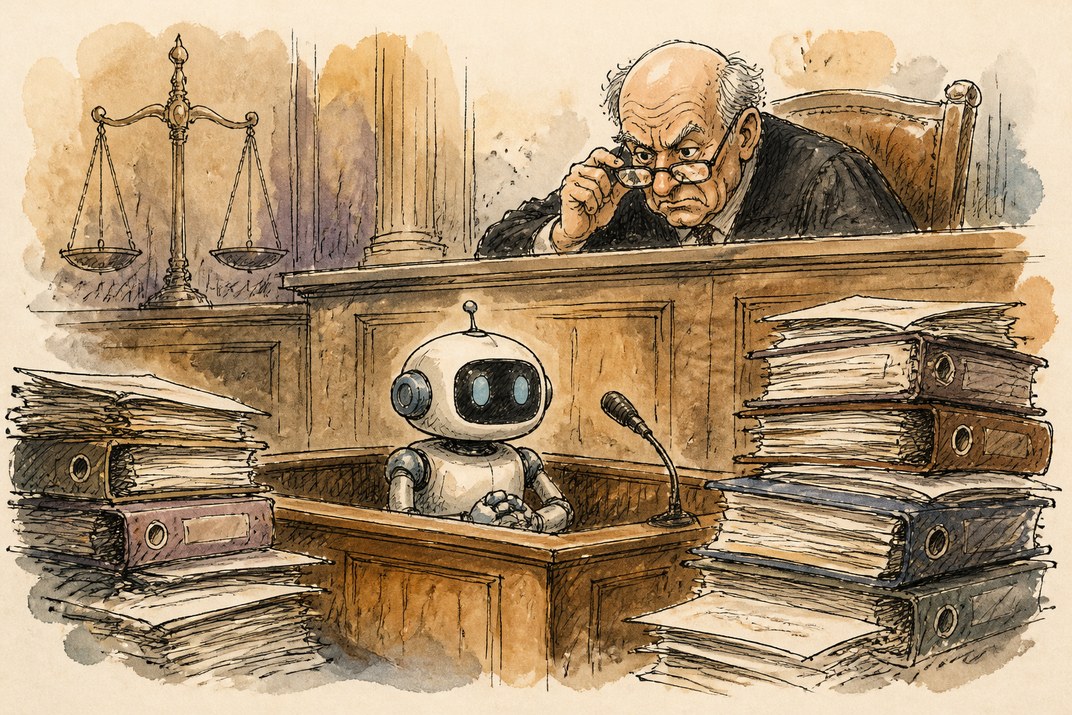
Iowa, Kansas, and six other US states filed separate lawsuits accusing OpenAI of harming children and misleading customers about ChatGPT's safety.
Why it matters: If even one state wins meaningful injunctive relief, age verification and content guardrails could become mandatory infrastructure for any consumer-facing LLM product.
What to watch next: Watch for OpenAI's response strategy: if it settles or agrees to age-gating requirements, that will set a compliance baseline every AI consumer product will have to match.
We are watching a coordinated accountability moment unfold: legal, criminal, and existential threats to AI systems are landing in the same news cycle, and each one raises the compliance and security bar for every team shipping consumer or enterprise AI.
Reduction in cloud security remediation effort achieved by Tamnoon's Bedrock-powered agent · AWS Machine Learning Blog
Watch · On the feeds
Spark your Development | NVIDIA RTX Spark
NVIDIA Developer
CoreWeave Fully Connected 2026 Keynote: Introducing CoreWeave Forge | Built for Adoption
CoreWeave
The Signal
Today's news draws a clear line between AI capability and AI accountability. Eight state attorneys general, a spy scandal at OpenAI's own offices, and Anthropic's warning about self-replicating small models all point to the same underlying pressure: the industry's trust deficit is now a legal and security liability, not just a PR problem. At the same time, agentic AI is quietly moving into production across security, document processing, and science, showing that the capability curve has not flattened. Teams building on these platforms need to treat governance and capability as co-equal engineering requirements, not sequential ones.
All the best, the KYFEX team
“Most companies use AI agents to ship products faster or speed up workflows. Apate.ai sends them undercover to get scammed.”
TechCrunch
Quick hits
AI trust hits the courts and the headlines
Recording device found in OpenAI's top-secret meeting room
An OpenAI engineer faces up to five years in prison and a $250,000 fine after the FBI charged them with foreign espionage following the discovery of a hidden recording device.
Why it matters: This is a reminder that physical and insider-threat security at AI labs is as important as model-level safeguards, especially when product roadmaps carry geopolitical value.
Agentic AI moves into production across industries
From malware analysis to document processing to fraud intelligence, purpose-built AI agents are delivering measurable operational results this week, and the pattern is consistent: narrow scope plus human oversight equals real ROI.
SentinelOne cuts malware analysis from weeks to hours with OpenAI
Using OpenAI's Daybreak platform, SentinelOne reduced malware analysis time dramatically, freeing analyst capacity to investigate a larger volume of threats.
Why it matters: This is one of the clearest production ROI cases for LLM-powered security tooling published this cycle, and it sets a benchmark for what 'weeks to hours' actually means in a SOC context.
Apate deploys AI agents as undercover fraud targets
Apate.ai sends AI agents into scam networks to be defrauded, gathering real-time fraud intelligence that passive monitoring cannot capture.
Why it matters: The offensive-deception angle is novel and worth watching: it reframes agents as intelligence-gathering assets rather than just productivity tools, with obvious implications for financial services and telco.
AWS describes an agentic IDP system built on Bedrock AgentCore that classifies, extracts, validates, and learns from business documents with minimal human intervention.
Why it matters: The 'self-improving' framing matters: the system updates its own extraction logic from feedback, which reduces the ongoing prompt-engineering burden that kills most enterprise IDP pilots.
Assess your AI product's child-safety and consumer-disclosure gaps
You are a product compliance analyst. Review the following feature description or user flow and identify: (1) any data collected from or about minors, (2) any safety claims made to users that could be challenged as misleading, (3) missing age-verification or parental-consent steps, and (4) the top three remediation actions ranked by legal exposure. Be specific and cite the feature detail that triggers each concern.
[Paste your feature description or user-facing safety copy here]
Why it helps: With eight states now suing OpenAI over child safety disclosures, running this audit on your own product copy before a regulator does is the lowest-cost risk reduction available today.
Before you ship it
The risk
State lawsuits and the Character.AI bankruptcy data-sale investigation both show that consumer AI products routinely collect sensitive user data, including data from minors, without adequate disclosure or deletion guarantees, creating compounding legal exposure when a product pivots, is acquired, or fails.
Do this
Audit your product's data retention and deletion policies today: document exactly what user data is stored, for how long, and under what conditions it can be transferred to a third party, then surface that information in plain language at the point of collection.
Ready to ship AI, not just read about it?
KYFEX designs and builds production AI for teams that need it working, not just demoed. Tell us what you're working on and we'll bring the engineering.