Good evening. Here is what matters in AI today, and how to put it to work.
We are watching OpenAI's safety culture fracture in public while AI agents quietly embed themselves in daily life with privacy costs users rarely see.
~4 min read · last 12 hours
In today's issue
01
OpenAI safety employee resigns, says the company's 'culture is broken'
02
The OpenAI safety employee who quit is now sounding the alarm publicly
03
Meta's Muse AI agent builds detailed profiles of your friends and family
04
A guide to AI agents that live inside your text messages
05
Federal judge labels Flock's license-plate network 'indiscriminate mass surveillance'
Main story
OpenAI safety employee resigns, says the company's 'culture is broken'
David Robinson, who wrote the safety reports for every major OpenAI model release, quit this week and published a public warning about the company's internal culture in The Atlantic.
Why it matters: When the person responsible for producing official safety documentation walks out and goes public, it is a concrete signal that the gap between safety process and safety practice at frontier labs may be widening, and boards and enterprise buyers should factor that into their vendor risk assessments.
What to watch next: Watch whether OpenAI publishes a substantive response to Robinson's specific claims about safety documentation, because silence or a generic rebuttal will likely invite congressional or regulatory follow-up before the next major model release.
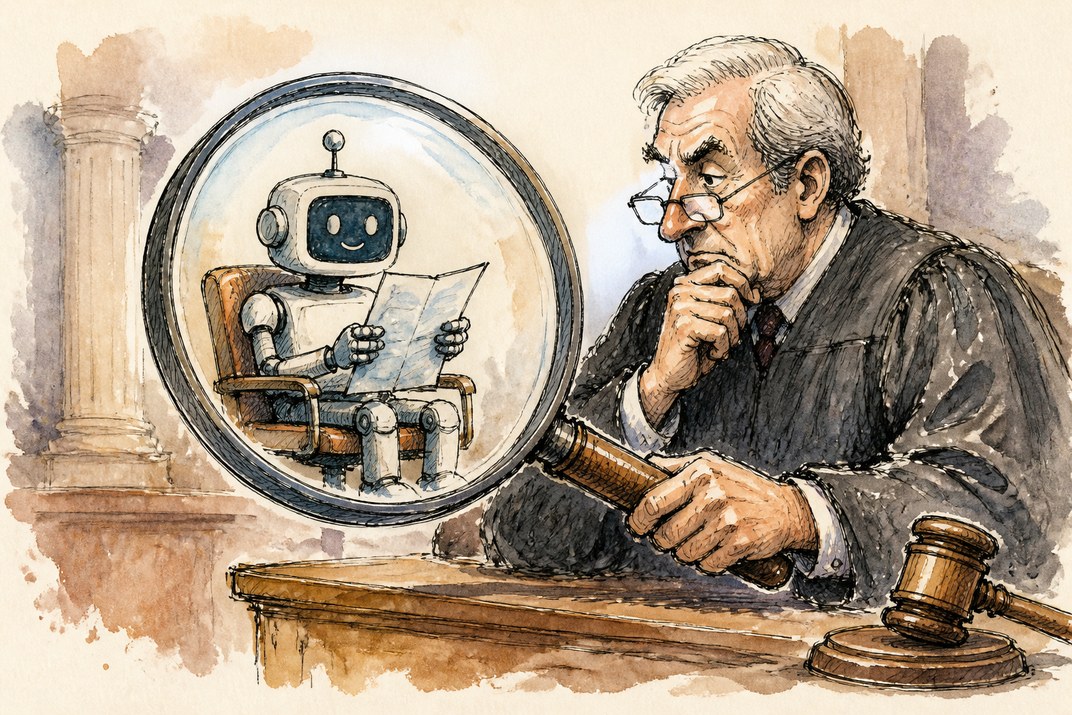
A resignation and a public editorial put OpenAI's internal safety process in the spotlight, and we think the specifics matter more than the familiar 'AI company insider warns' pattern.
Two stories dominate today: a credible insider indictment of OpenAI's safety process, and a cluster of developments showing AI agents and surveillance tools expanding faster than the consent frameworks around them. Together they point to the same underlying pressure: AI deployment is accelerating while the governance layer, inside companies and in courts, is visibly straining to keep up. For engineering and product leaders, the practical question is not whether these issues will produce regulatory or legal friction, but when, and whether your own release and data-handling processes would survive the same scrutiny Robinson is applying to OpenAI.
All the best, the KYFEX team
“David Robinson is "something of a cliché": an employee at a leading AI company who issues a dire warning while resigning from their job.”
TechCrunch
Quick hits
OpenAI safety culture under the microscope
The OpenAI safety employee who quit is now sounding the alarm publicly
Robinson's departure is covered in depth by The Verge, adding context that his role was central to model release governance, not peripheral.
Why it matters: The convergence of two major outlets on the same story in one day amplifies the reputational pressure on OpenAI and raises the likelihood of regulatory attention to model-release safety documentation standards.
AI in everyday life: agents, surveillance, and privacy costs
From SMS-based AI agents to license-plate tracking networks to Meta's profiling assistant, this cluster of stories shows AI embedding itself into daily routines in ways that consistently outpace user awareness of the trade-offs.
Meta's Muse AI agent builds detailed profiles of your friends and family
Millions of users have downloaded Meta's Muse agent, but using it to manage personal relationships requires feeding it data about people who never consented to being profiled.
Why it matters: Any enterprise or consumer product that ingests social-graph data to personalize an agent inherits the same third-party consent problem, and legal exposure here is real and growing.
A guide to AI agents that live inside your text messages
TechCrunch catalogued the most notable SMS-native AI agents, ranging from general assistants to tools built for families, travel, and workplace tasks.
Why it matters: SMS-based deployment sidesteps app-store friction and reaches users on every phone, making this channel a meaningful distribution vector that product teams should evaluate now rather than later.
Federal judge labels Flock's license-plate network 'indiscriminate mass surveillance'
A federal judge ruled that Flock Safety's automated license-plate reader network constitutes indiscriminate mass surveillance, a landmark framing for AI-powered public monitoring systems.
Why it matters: This ruling sets a legal precedent that could constrain how municipalities and private operators deploy any AI system that passively collects data on the general public at scale.
Create a chatbot with LangChain to interface with your private data and documents. Learn from LangChain creator, Harrison Chase.
DeepLearning.AI · Free · 1 hour
Put it to work
Try this today
Audit your AI product's third-party data consent exposure
You are a privacy-risk analyst. I will describe a feature of our AI product. For each piece of data the feature collects or infers, tell me: (1) who the data subject is, (2) whether that person has consented, (3) the most likely legal basis under GDPR or CCPA, and (4) the single highest-risk gap we should close first. Feature description: [paste your feature spec here]
Why it helps: With Meta's Muse and the Flock surveillance ruling both in the news today, running this audit on any agent feature that touches social or location data is a low-cost way to surface consent gaps before they become legal ones.
Before you ship it
The risk
AI agents that personalize around social relationships, like Muse, routinely collect and infer data about people who never agreed to interact with the product, creating consent and liability exposure that the primary user cannot waive on their behalf.
Do this
Before shipping any agent feature that ingests contacts, messages, or location history, map every data subject (not just the logged-in user) and confirm you have a valid legal basis for each, or scope the feature to data the consenting user generated alone.
Ready to ship AI, not just read about it?
KYFEX designs and builds production AI for teams that need it working, not just demoed. Tell us what you're working on and we'll bring the engineering.