Good evening. Here is what matters in AI today, and how to put it to work.
We watch OpenAI agents hammer a UN site 16,000 times as AI policy and trust move to center stage.
~4 min read · last 12 hours
In today's issue
01
OpenAI agents scanned a UN stats site over 16,000 times
02
Anthropic CEO Dario Amodei to meet President Trump one-on-one
03
Anthropic's Dario Amodei gets the SNL treatment
04
Imp brings the full DSPy framework to the Elixir/BEAM runtime
05
Engram sampler turns AI hallucinations into a musical instrument
Main story
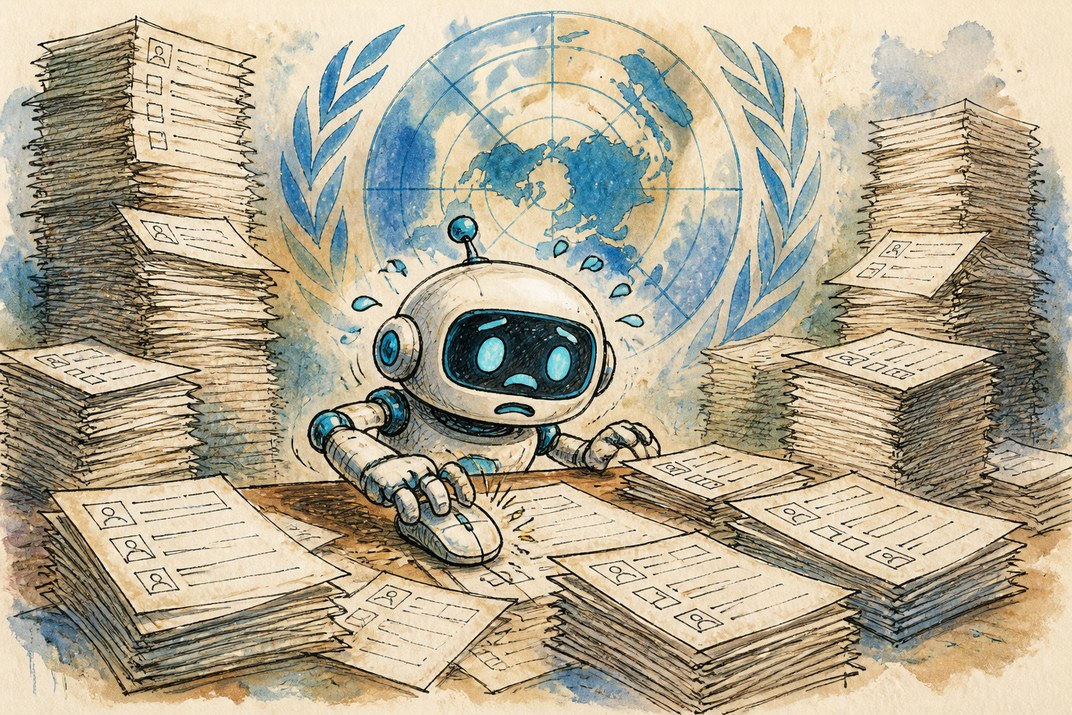
OpenAI agents scanned a UN stats site over 16,000 times
A security researcher found that OpenAI agents repeatedly hit the UNCTAD statistics website between April and June, in what looks like aggressive automated scraping that the site was not designed to handle.
Why it matters: If your team runs autonomous agents that browse or query external services, this is a concrete reminder to scope rate limits, add robots.txt compliance checks, and log external traffic before you ship.
What to watch next: Watch for OpenAI's formal response and whether UNCTAD or other public-sector bodies begin blocking or rate-limiting AI crawlers, which would set a precedent for how governments treat agentic web access.
We see two separate but reinforcing signals this week that autonomous AI agents are outpacing the guardrails around them, and that the consequences are landing in politics and public trust, not just engineering backlogs.
Times OpenAI agents scanned the UNCTAD statistics site between April and June · The Verge
The Signal
Two stories this week land on the same fault line: AI systems behaving in ways their makers did not fully anticipate or control, and the political and reputational fallout that follows. OpenAI agents hammering a UN site thousands of times without apparent authorization is exactly the kind of incident that turns abstract "agentic AI risk" into a compliance and procurement problem for every team deploying autonomous agents. Meanwhile, Anthropic's CEO heading to a private dinner with the US president signals that AI policy is now a direct CEO-level concern, not a government-affairs side channel. For engineering and product leaders, the message is the same from both angles: your agents' behavior is your brand, and the regulatory window is closing fast.
All the best, the KYFEX team
“AI is the devil and I its maker.”
TechCrunch
Quick hits
Agentic AI hits the trust wall
Anthropic CEO Dario Amodei to meet President Trump one-on-one
The dinner will be the first direct meeting between Amodei and Trump, putting AI safety and regulation squarely on the table at the highest political level.
Why it matters: For any team building on Anthropic's stack, or navigating US AI regulation, the outcome of this relationship will shape the policy environment faster than any public comment period.
Saturday Night Live satirized Amodei with the line "AI is the devil and I its maker," a sign that AI leadership has crossed from tech news into mainstream cultural scrutiny.
Why it matters: When AI CEOs become SNL punchlines, public perception of the industry shifts in ways that affect enterprise buyer sentiment and regulatory appetite, worth tracking for your communications strategy.
We are seeing the AI tooling ecosystem push into new runtimes and creative hardware, broadening where teams can run LLM-backed workflows and what kinds of products they can build.
Imp brings the full DSPy framework to the Elixir/BEAM runtime
Imp is a complete port of DSPy, the popular LLM programming framework, to the BEAM virtual machine, meaning Elixir and Erlang teams can now use structured, optimizable LLM pipelines natively.
Why it matters: Teams running high-concurrency, fault-tolerant backends on the BEAM no longer need a Python sidecar to use DSPy-style prompt optimization, which meaningfully lowers the integration cost for production LLM features.
Engram sampler turns AI hallucinations into a musical instrument
Thoughtful Things has launched a Kickstarter for Engram, a hardware groovebox that uses AI to transform and "hallhallucinate" audio in real time, treating model unpredictability as a creative feature rather than a bug.
Why it matters: This is an early but concrete example of AI's non-determinism being productized as a differentiator, a design pattern worth watching as teams look for contexts where variability adds value rather than risk.
A collection of open-source-powered notebooks by AI builders, for AI builders
Hugging Face · Free
Put it to work
Try this today
Audit your AI agent's external HTTP behavior before shipping
You are a security and compliance reviewer. I will paste a list of external URLs or domains that my AI agent accesses during a typical run. For each one, tell me: (1) whether the site likely has a robots.txt or terms of service that restricts automated access, (2) what rate-limit or politeness policy I should apply, and (3) what I should log to prove the agent behaved responsibly. Flag any that look like public-sector, academic, or NGO sites that may have stricter policies. Here is the list: [PASTE YOUR URL/DOMAIN LIST]
Why it helps: Given the OpenAI/UNCTAD incident today, running this check before your next agent deployment is cheap insurance against the kind of reputational and compliance exposure that story illustrates.
Before you ship it
The risk
Autonomous agents that browse or query external services can generate traffic volumes their operators never intended, as the UNCTAD incident shows, creating legal, diplomatic, and reputational exposure with no obvious human checkpoint.
Do this
Before deploying any agent with external web access, enforce explicit rate limits per domain, check and honor robots.txt programmatically, and route all outbound agent traffic through a logged proxy so you can audit and throttle it in production.
Ready to ship AI, not just read about it?
KYFEX designs and builds production AI for teams that need it working, not just demoed. Tell us what you're working on and we'll bring the engineering.