Good evening. Here is what matters in AI today, and how to put it to work.
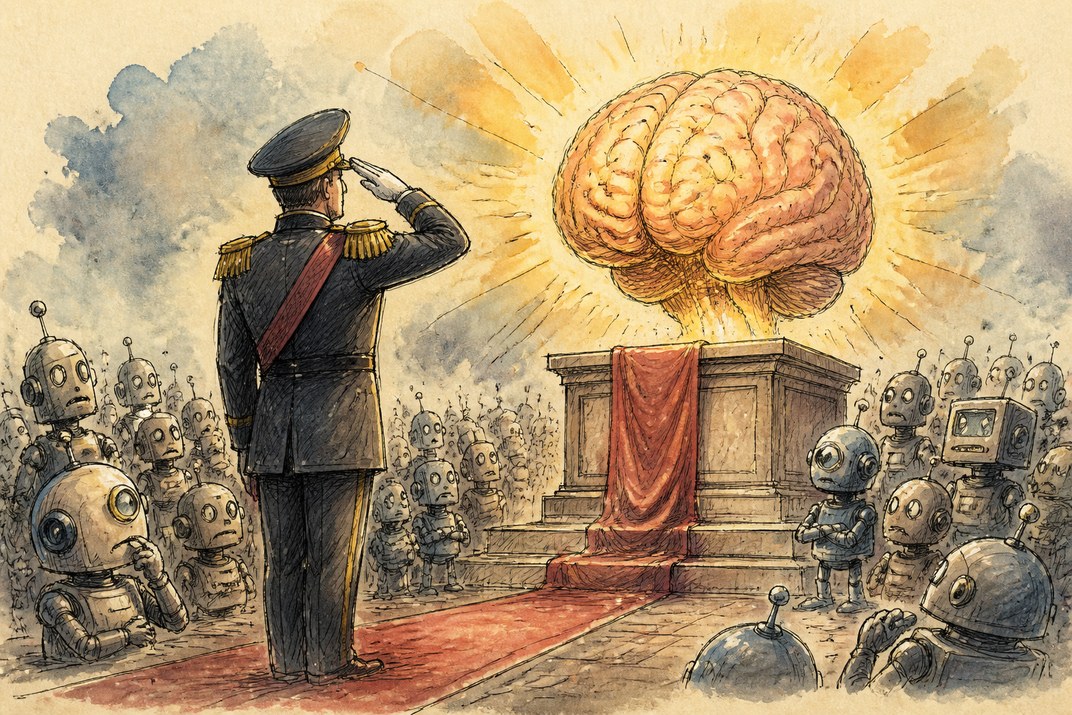
AI governance is fracturing in real time: political theater, industry spin, and genuine safety debate are all colliding this week.
~3 min read · last 12 hours
In today's issue
01
Trump proposes an 'AI Force' and an 'AI czar'
02
Nvidia's Jensen Huang says AI fears are overblown
03
Is the AI industry actually serious about slowing down?
04
Alibaba open-sources OpenCodeReview, an AI-powered code review CLI
05
World-model companies are keeping their actual plans secret
Main story
Trump proposes an 'AI Force' and an 'AI czar'
The president announced on Truth Social that he wants a dedicated AI leadership structure, even as calls from across the political spectrum to slow AI development grow louder.
Why it matters: A formal US government AI command structure would shift procurement, compliance, and security requirements overnight, so teams building for public-sector or regulated markets need to watch this closely.
What to watch next: Watch whether Congress or any federal agency moves to formally define the scope of a potential "AI czar" role, because that definition would set the compliance perimeter for every team building AI into government-adjacent systems.
We are watching a convergence of political posturing, industry self-interest, and genuine safety debate that will shape the regulatory environment every AI team operates in.
The biggest story this week is not a model release or a benchmark. It is the question of who controls AI development and at what pace. A US president floating an "AI Force", a chip billionaire dismissing researcher concerns, and a podcast debate on whether executive calls for restraint are sincere all point to the same tension: the governance layer is being contested loudly and publicly, with no clear resolution in sight. For engineering and product leaders, this uncertainty is itself a planning constraint. Regulatory shape, procurement rules, and liability frameworks could shift materially depending on which of these competing visions gains traction.
All the best, the KYFEX team
“Everyone in the world-models space is sitting on a pile of cash and a ton of buzz, but good luck getting anyone, from the founders to their own data suppliers, to tell you what they're actually building.”
TechCrunch
Quick hits
AI governance: fear, politics, and who controls the brakes
Nvidia's Jensen Huang says AI fears are overblown
In a CBS interview, Huang dismissed concerns raised by longtime AI researchers, arguing the risks are being exaggerated.
Why it matters: When the person who profits most from AI acceleration is also the loudest voice downplaying risk, it is worth weighing his claims against the researchers he is contradicting.
Is the AI industry actually serious about slowing down?
A debate on TechCrunch's Equity podcast questions whether AI executives calling for restraint are genuine or performing caution for an audience.
Why it matters: The gap between what executives say publicly and what they fund internally is the single most important signal for anyone forecasting the pace of capability releases.
Two releases this week show that practical, production-ready AI tooling is increasingly arriving through open-source channels rather than proprietary platforms.
Alibaba open-sources OpenCodeReview, an AI-powered code review CLI
OpenCodeReview combines deterministic pipelines with AI assistance to bring automated, AI-assisted code review to any team's command line.
Why it matters: A vendor-neutral, open-source code review CLI lowers the bar for teams that want AI in their review loop without committing to a proprietary platform or sharing code with a third-party API.
World-model companies are keeping their actual plans secret
Despite raising large rounds and generating significant buzz, companies in the world-models space are refusing to disclose what they are building, even to their own data suppliers.
Why it matters: If you are evaluating world-model vendors for simulation or planning use cases, the opacity itself is a due-diligence red flag that should factor into any build-versus-buy decision.
Design, build, and deploy apps with an AI coding agent in an integrated web development environment.
DeepLearning.AI · Free · 1 hour
Put it to work
Try this today
Audit your AI vendor's opacity before a build-vs-buy decision
I am evaluating [vendor or product name] for [use case]. Based on the following information I have gathered: [paste what you know about their architecture, data practices, and roadmap], identify the gaps where the vendor has not disclosed key details. For each gap, suggest a specific question I should ask them, a public proxy signal I could check instead, and the risk I accept if I proceed without an answer.
Why it helps: With world-model companies actively withholding plans even from their own data suppliers, structured vendor due diligence is more important than ever before signing a contract.
Before you ship it
The risk
Open-source code review tools like OpenCodeReview process your actual source code, which may contain secrets, proprietary logic, or regulated data that should never leave your environment.
Do this
Run open-source AI code review tools in an air-gapped or self-hosted environment and audit the tool's outbound network calls before enabling it on any repository that touches production or regulated data.
Ready to ship AI, not just read about it?
KYFEX designs and builds production AI for teams that need it working, not just demoed. Tell us what you're working on and we'll bring the engineering.