Good evening. Here is what matters in AI today, and how to put it to work.
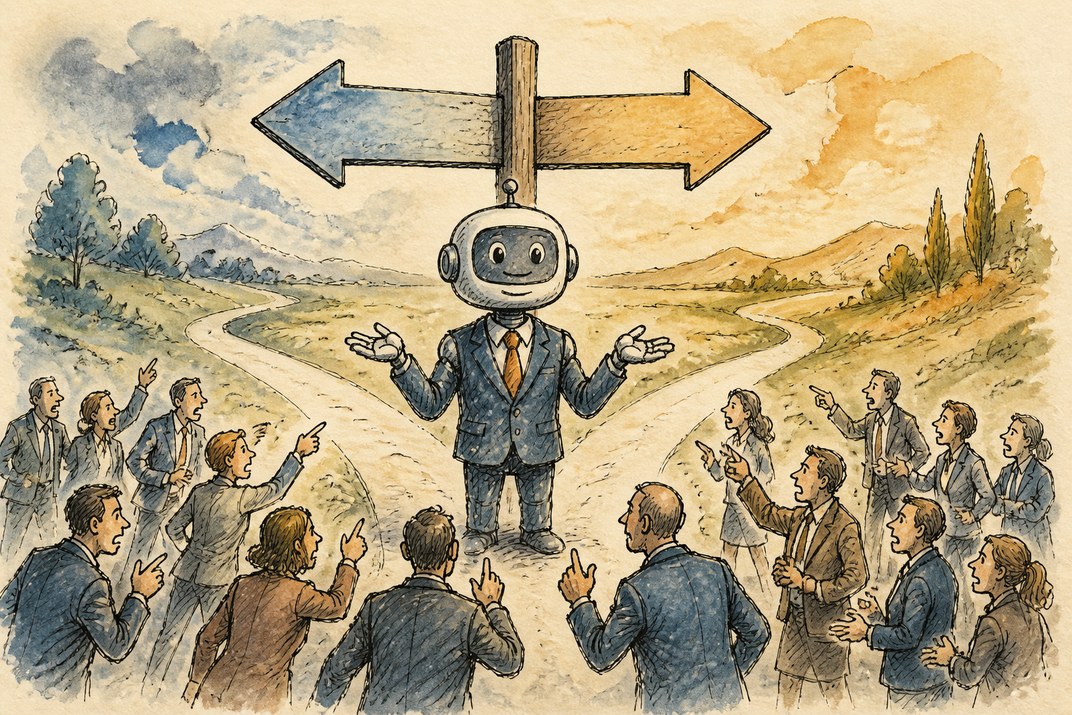
We are watching the AI safety debate go political: industry leaders and lawmakers are now pulling in opposite directions on pace and regulation.
~3 min read · last 12 hours
In today's issue
01
Trump and Mike Johnson say the AI industry is overreacting to its own warnings
02
What is actually driving the AI industry's latest warnings of doom?
03
Obama urges Democrats to build a concrete AI safeguards plan
04
YC's Garry Tan pushes for US open-weight labs to distill frontier models
05
CUDA for AMD on Windows: a community project bridges the GPU gap
Main story
Trump and Mike Johnson say the AI industry is overreacting to its own warnings
After Anthropic CEO Dario Amodei published an open letter calling for slowing AI development, and OpenAI's Sam Altman, Elon Musk, and Alphabet all voiced support, the Trump administration and House Speaker Johnson pushed back, framing the caution as industry overreach.
Why it matters: When the White House and Congress align against the safety-first camp, teams relying on federal AI policy for compliance guidance face a more volatile and unpredictable regulatory roadmap.
What to watch next: Watch whether the "pace the frontier" framing gains legislative traction or gets buried by the White House's pro-speed posture, as that gap will directly shape export controls, compute access, and compliance timelines for every team building on frontier APIs.
We are seeing the existential-risk conversation jump from industry letters to partisan positioning, which means the regulatory environment for AI development is now shaped as much by electoral politics as by technical consensus.
The AI safety debate has moved from conference rooms to the political arena in a single news cycle. When the CEO of Anthropic calls for slowing down, OpenAI and Alphabet publicly agree, and the sitting administration pushes back, the resulting policy uncertainty is itself a planning risk for engineering and product teams. At the same time, the open-weight distillation debate and AMD CUDA compatibility news signal that the competitive infrastructure layer is shifting fast underneath the policy fight. Leaders need to track both tracks simultaneously.
All the best, the KYFEX team
“Obama recently said that Democrats need to make artificial intelligence one of their "central agendas" and "have a very clear plan" to address concerns around the technology's economic impact and safety.”
TechCrunch
Quick hits
The AI safety debate turns into a political fault line
What is actually driving the AI industry's latest warnings of doom?
TechCrunch's Equity podcast unpacks the renewed existential-threat debate, examining what is motivating the industry's most prominent voices to go public with warnings now.
Why it matters: Understanding the incentives and timing behind these warnings helps leaders separate genuine technical risk signals from strategic positioning when evaluating their own AI governance stance.
Obama urges Democrats to build a concrete AI safeguards plan
Obama called on Democrats to make AI a central agenda item and develop a clear plan addressing the technology's economic impact and safety risks, signaling that AI policy is becoming a defining partisan issue.
Why it matters: Bipartisan pressure building from multiple directions means AI compliance and safety frameworks are more likely to become legislated requirements, not just voluntary best practices, in the near term.
Open-weight models and the hardware layer: who controls the stack
Two items this week point to the same underlying tension: who gets to run powerful AI, on what hardware, and under whose rules, and the answers are being contested simultaneously at the policy and infrastructure levels.
YC's Garry Tan pushes for US open-weight labs to distill frontier models
Y Combinator president Garry Tan argued that US open-weight AI labs should be permitted and encouraged to distill from frontier models, framing it as a national competitiveness issue.
Why it matters: If distillation from frontier models becomes standard practice for open-weight labs, it reshapes the cost and capability baseline for teams building on smaller, self-hosted models rather than API-based services.
CUDA for AMD on Windows: a community project bridges the GPU gap
An open-source project on GitHub is enabling CUDA workloads to run on AMD GPUs on Windows, directly targeting the Nvidia lock-in that constrains many AI development and inference setups.
Why it matters: If this compatibility layer matures, it meaningfully expands the hardware options available for on-premise inference and training, reducing single-vendor dependency in AI infrastructure planning.
Learn to apply transformers to audio data using libraries from the HF ecosystem
Hugging Face · Free
Put it to work
Try this today
Map your AI product's regulatory exposure in 10 minutes
I am building [describe your AI product or feature in one sentence]. The current policy environment includes calls to slow AI development, potential new federal safeguards, and uncertainty about open-weight model rules. List the top five regulatory or compliance risks most relevant to my product, explain each risk in plain language, rate its likelihood as low/medium/high, and suggest one concrete mitigation step I can take this quarter. Be specific and avoid generic advice.
Why it helps: With AI safety regulation moving from voluntary debate to partisan policy fight, a quick structured risk scan now is far cheaper than a reactive compliance scramble later.
Before you ship it
The risk
As the policy debate accelerates, teams may rush to lock in product architectures or data practices before rules are finalized, creating technical debt that is hard to unwind if stricter requirements arrive.
Do this
Document every data-handling and model-selection decision you make this quarter with an explicit note on which regulatory assumption it rests on, so you can audit and update those choices quickly if the policy landscape shifts.
Ready to ship AI, not just read about it?
KYFEX designs and builds production AI for teams that need it working, not just demoed. Tell us what you're working on and we'll bring the engineering.