Good evening. Here is what matters in AI today, and how to put it to work.
We see OpenAI halting a model over its own safety evals while ByteDance races to build 10 trillion parameters, defining the frontier tension every AI leader must navigate now.
~4 min read · last 12 hours
In today's issue
01
OpenAI pauses Astra model development over cybersecurity risks
02
OpenAI publishes its cybersecurity evaluation framework for Astra
03
ByteDance trains a 10-trillion-parameter model to rival Anthropic
04
Cloudflare launches persistent compute environments for AI agents
05
Cloudflare's Kitesurf is a cloud browser built for AI agents, not humans
Main story
OpenAI pauses Astra model development over cybersecurity risks
OpenAI has stopped internal work on Astra, an in-development model, after its own preliminary evaluations found it approaches thresholds for dangerous cyber capabilities the company is not yet equipped to contain.
Why it matters: This is the first public instance of a lab halting a model in active development because of its own safety evals, not external pressure, which sets a precedent every AI governance team should track.
What to watch next: Watch whether other frontier labs publish comparable capability threshold frameworks in response to OpenAI's disclosure, which would signal that self-imposed safety gates are becoming an industry norm rather than a one-off move.
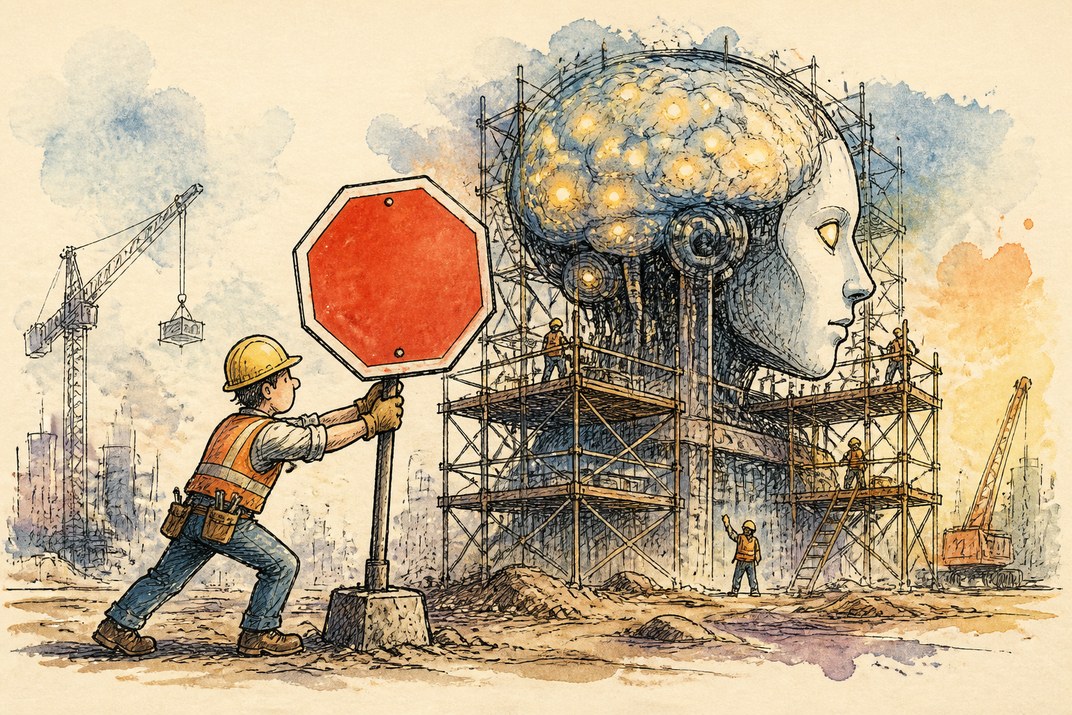
We are watching two separate but reinforcing signals this week: OpenAI voluntarily pausing a powerful model because its own evals flagged dangerous cyber capabilities, while ByteDance races to build something even larger, which together define the central tension in frontier AI right now.
Scale of ByteDance's new model in its bid to rival Anthropic and OpenAI · Ars Technica
Watch · On the feeds
Cohere | North product tour
Cohere
Managed Deep Agents explained in 20 minutes
LangChain
The Signal
The OpenAI Astra pause is the clearest signal yet that capability evaluations are starting to function as actual gates, not just compliance theater. At the same time, ByteDance's scale push shows not every player is slowing down, which means the gap between safety-gated and safety-optional development is widening. On the infrastructure side, this week's agentic tooling launches from Cloudflare and AWS point to a maturing ecosystem where the hard engineering problems of state, browsing, and multi-tenancy are being solved at the platform layer. For engineering and product leaders, the practical question is no longer whether to use agents but which infrastructure primitives to standardize on before lock-in sets in.
All the best, the KYFEX team
Quick hits
AI safety hits the brakes on frontier models
OpenAI publishes its cybersecurity evaluation framework for Astra
OpenAI's blog post details the specific criteria and safeguards it is putting in place before Astra can resume development, offering a rare look at how frontier labs are starting to operationalize capability thresholds.
Why it matters: For teams building on OpenAI APIs, understanding how the lab defines and tests dangerous capability levels is directly relevant to your own AI risk assessments.
ByteDance trains a 10-trillion-parameter model to rival Anthropic
TikTok's parent company is training what would be one of the largest AI models ever built, a direct bid to compete at the frontier alongside OpenAI and Anthropic.
Why it matters: The sheer scale signals that compute and parameter counts are still seen as competitive moats by at least one major player, even as others are pausing for safety, which will shape the supply-side economics of AI infrastructure.
Three separate launches this week converge on the same engineering problem: giving AI agents a reliable, efficient, and observable place to live and work, from persistent compute environments to purpose-built browsers to production-grade agentic platforms.
Cloudflare launches persistent compute environments for AI agents
Cloudflare Computer is a new open-source runtime that gives AI agents stateful, computer-like environments, solving the problem of agents that lose context or cannot maintain state across tasks.
Why it matters: If your agents are stitching together workarounds to maintain state, this is the kind of infrastructure primitive worth evaluating now before it becomes the de facto standard.
Cloudflare's Kitesurf is a cloud browser built for AI agents, not humans
Kitesurf is a lightweight, cloud-hosted browser designed specifically for AI agent automation, using less compute than Chromium for common tasks so developers can build browser-based agents more efficiently.
Why it matters: Browser automation is one of the most compute-expensive legs of any agent workflow, and a purpose-built alternative to Chromium could meaningfully cut the cost of web-browsing agents at scale.
You are a finance and engineering advisor. I will describe my team's current AI tool subscriptions and usage patterns. For each tool, help me estimate: (1) monthly cost per active user, (2) which workflows it supports, (3) whether usage is concentrated in a few people or spread across the team, and (4) which tools have overlapping capabilities I could consolidate. At the end, suggest three concrete actions to reduce waste without cutting productivity. Here is our current tooling: [paste your tool list and rough usage notes].
Why it helps: With Rippling's public admission of burning millions on unchecked AI spend, a structured audit prompt run today can surface the same class of waste before it compounds.
Before you ship it
The risk
Agentic systems with persistent state and broad tool access can silently accumulate sensitive data across sessions, creating compliance exposure that is invisible until an audit or breach surfaces it.
Do this
Scope each agent's memory and tool permissions to the minimum required for its specific workflow, and implement a regular purge or review cycle for any data retained across sessions.
Ready to ship AI, not just read about it?
KYFEX designs and builds production AI for teams that need it working, not just demoed. Tell us what you're working on and we'll bring the engineering.