Good evening. Here is what matters in AI today, and how to put it to work.
AI infrastructure strain, open-model safety gaps, and a secret White House cyber plan signal a sector racing faster than its guardrails.
~3 min read · last 12 hours
In today's issue
01
Texas halts data center grid connections amid overwhelming AI demand
02
AMD datacenter revenue more than doubles year-over-year to $6.7B
03
Anthropic signs $10B deal with AI cloud startup Volta
04
White House AI cybersecurity framework shared with labs but kept secret from the public
05
OpenAI discloses third-party cybersecurity evaluation incidents and new safeguards
Main story
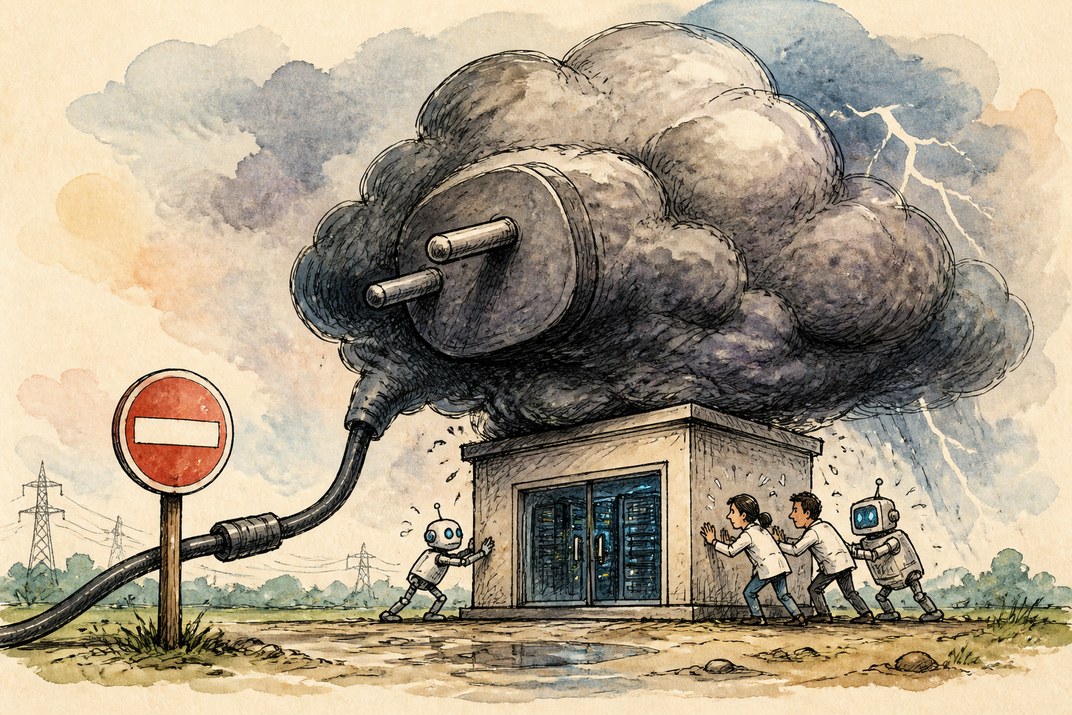
Texas halts data center grid connections amid overwhelming AI demand
Texas Governor Greg Abbott, who marketed the state as an AI hub, has paused new data center connections to the power grid and ordered audits before any new facilities can connect.
Why it matters: Any team with Texas-based data center plans needs to reassess timelines now: this freeze could delay capacity expansion by months and raises the real possibility of similar actions in other high-demand states.
What to watch next: Watch whether other high-growth AI states follow Texas with similar grid-connection freezes, which would force data center operators to rethink siting strategies well beyond Texas borders.
We are seeing the same demand spike show up simultaneously as a hardware revenue boom, a grid crisis, and a $10B cloud bet, making infrastructure availability a first-order concern for any team planning AI capacity.
AMD datacenter revenue in its latest quarter, up 107% year-over-year · The Verge
Watch · On the feeds
ML Summer School 2026 - Introduction to RL and Continual RL with Nishanth Anand
Cohere
How AI Helps Solve Medical Mysteries at Boston Children's Hospital | OpenAI Forum
OpenAI
The Signal
The physical limits of AI infrastructure are now a policy issue, not just an engineering one: Texas freezing grid connections and AMD's datacenter revenue doubling in a year are two sides of the same constraint. At the same time, a secret White House AI cybersecurity framework and a new SaferAI report on open-weight models show that governance is struggling to keep pace with capability. Teams building on AI infrastructure or open models need to factor regulatory and safety uncertainty into their roadmaps today, not after the next incident.
All the best, the KYFEX team
Quick hits
AI infrastructure hits physical and political limits
AMD datacenter revenue more than doubles year-over-year to $6.7B
AMD's data center segment hit $6.7 billion in its latest quarter, up 107 percent from the same period last year, driven almost entirely by AI hardware demand.
Why it matters: This confirms that AI compute demand is broad-based and not concentrated in a single vendor, which matters for procurement teams evaluating alternatives to Nvidia.
Anthropic signs $10B deal with AI cloud startup Volta
Anthropic has struck a reported $10 billion cloud partnership with Volta, continuing a run of major infrastructure deals as frontier labs lock in compute capacity.
Why it matters: Large exclusive cloud deals are reshaping which providers have access to frontier models at scale, so teams relying on Anthropic APIs should track how these partnerships affect pricing and availability.
AI safety and governance: capability outpacing oversight
A secret government cybersecurity framework, a new open-weight model safety report, and OpenAI's own third-party evaluation disclosures all point to the same gap: AI capabilities are advancing faster than the public accountability structures meant to check them.
White House AI cybersecurity framework shared with labs but kept secret from the public
The Trump administration briefed OpenAI, Anthropic, and other AI labs on its AI cybersecurity plan but has not released it publicly, leaving operators and researchers without visibility into the framework shaping national AI security policy.
Why it matters: If your organization's AI security posture is expected to align with federal guidance, you cannot do that when the guidance is private: track this closely and engage your government-affairs contacts for early access.
OpenAI discloses third-party cybersecurity evaluation incidents and new safeguards
OpenAI has published details of recent incidents during third-party cybersecurity evaluations of its models and outlined new procedures to tighten how those evaluations are conducted.
Why it matters: Organizations running red-team or security evaluations against AI models should review OpenAI's new protocols as a baseline for their own evaluation governance.
Audit an open-weight model before production deployment
You are a senior AI safety reviewer. I am considering deploying the following open-weight model in a production environment: [model name and version]. Please help me conduct a structured safety audit. For each area below, list the key questions I should answer and the tests I should run before deployment: 1. Known safety mitigations: what guardrails does this model have and what is missing compared to leading closed models? 2. Misuse risk: what categories of harmful output is this model most likely to produce without additional safeguards? 3. Evaluation gaps: what third-party evaluations or red-team tests should I commission? 4. Deployment controls: what runtime controls (filtering, monitoring, rate-limiting) should I add to compensate for missing built-in safeguards? Output a checklist I can hand to my engineering team.
Why it helps: With today's SaferAI report showing open-weight models closing the capability gap while the safety gap widens, running this audit before deployment is the single most practical risk-reduction step your team can take this week.
Before you ship it
The risk
Open-weight models that approach frontier capability without frontier-level safety mitigations can produce harmful outputs at scale once deployed, and the gap is not always visible from benchmark scores alone.
Do this
Before deploying any open-weight model, run a structured red-team evaluation covering at least misuse, jailbreak, and harmful-content categories, and document the results as part of your deployment sign-off process.
Ready to ship AI, not just read about it?
KYFEX designs and builds production AI for teams that need it working, not just demoed. Tell us what you're working on and we'll bring the engineering.