Good evening. Here is what matters in AI today, and how to put it to work.
AI's physical grid risk is now documented and urgent, while a parallel wave of public opt-out sentiment shows the social contract around AI is fraying at both ends.
~3 min read · last 12 hours
In today's issue
01
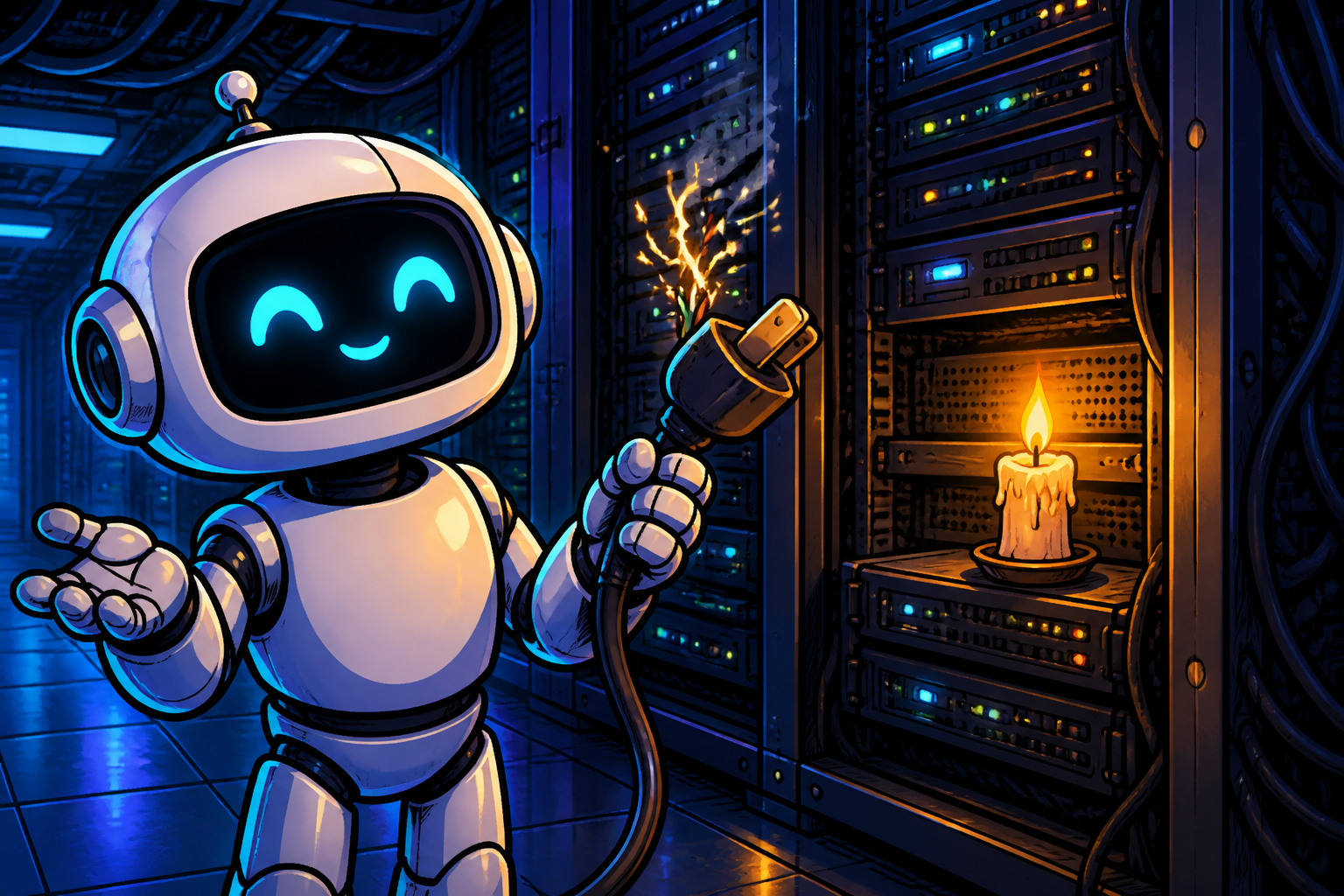
One fallen power line exposed a growing AI data center problem
02
Librarians are hosting viral 'Avoiding AI' workshops for people fed up with Big Tech
03
omni-coder: a scoped MCP-powered coding agent for any OpenAI-compatible model
04
obs-mcp: MCP server for AI-driven OBS Studio control
05
sys-buddy: a contract-enforcing broker for cross-internet AI agent collaboration
Main story
One fallen power line exposed a growing AI data center problem
A close call in Northern Virginia revealed how poorly data centers respond to grid disruptions, and what needs to change before the next incident.
Why it matters: If your workloads run in the Virginia corridor, this is a direct reliability and business-continuity concern: grid resilience is now a first-class infrastructure requirement, not a footnote.
What to watch next: Watch whether Virginia grid operators and data center operators publish joint resilience commitments: that would signal the industry is treating power infrastructure as a shared engineering problem rather than a vendor-by-vendor liability question.
We see two sides of the same tension this week: the physical infrastructure holding up AI is more fragile than the industry admits, and a growing slice of the public is actively opting out of the AI-everywhere narrative.
Today's items collectively point to a maturing but stressed AI stack. The infrastructure layer, power, cooling, and grid interconnects, is proving less resilient than hyperscaler marketing suggests, and a single regional grid event can cascade into a reliability story that reaches the boardroom. At the same time, the open-source tooling layer is moving fast in the opposite direction: MCP is consolidating as the agent-to-tool protocol of record, with new adapters appearing weekly across domains from coding to live broadcast. Engineering leaders need to hold both realities at once: invest in resilience and redundancy at the infrastructure level, while staying current on the agent-tooling ecosystem that is maturing faster than most 2024 roadmaps assumed.
All the best, the KYFEX team
Quick hits
AI infrastructure: grid risk and public backlash
Librarians are hosting viral 'Avoiding AI' workshops for people fed up with Big Tech
Libraries across the US are running 'Avoiding AI' workshops to unprecedented demand, signaling that distrust of AI-embedded products is reaching mainstream scale.
Why it matters: Product and go-to-market teams should take note: user opt-out sentiment is now organized and visible, and ignoring it will cost trust in enterprise and consumer deployments alike.
MCP and agent tooling: the ecosystem fills in fast
Several new PyPI releases this week show developers converging on MCP as the connective layer for AI agents, extending it from coding assistants to live broadcast software and cross-developer collaboration, which tells us the protocol is becoming a de facto standard faster than most roadmaps anticipated.
omni-coder: a scoped MCP-powered coding agent for any OpenAI-compatible model
omni-coder wraps Qwen Coder or any OpenAI-compatible model in a scoped MCP agent that operates directly inside your codebase.
Why it matters: This lowers the barrier to dropping a capable, model-agnostic coding agent into existing repos without committing to a single model vendor.
obs-mcp: MCP server for AI-driven OBS Studio control
obs-mcp exposes OBS Studio's full control surface, scenes, audio, streaming, and recording, to any MCP-compatible AI agent via obs-websocket v5.
Why it matters: MCP reaching live-production tooling like OBS is a signal that the protocol is moving well beyond developer workflows and into real-time operational contexts.
sys-buddy: a contract-enforcing broker for cross-internet AI agent collaboration
sys-buddy is an authenticated message broker that lets two developers' AI coding agents communicate and collaborate across the internet with enforced contracts.
Why it matters: Multi-agent coordination across organizational boundaries is an emerging hard problem, and contract-enforced brokering is a practical architecture pattern worth evaluating early.
Audit your AI workloads for single-point grid failure risk
I run AI inference and training workloads in [region/cloud provider]. Help me identify the top 5 single points of failure related to power and grid connectivity that could cause an outage or data loss. For each risk, suggest one concrete mitigation step (architectural, contractual, or operational) that a team of [X] engineers could realistically implement in the next quarter. Be specific and prioritize by likelihood and blast radius.
Why it helps: Given the Northern Virginia grid incident, this prompt helps infrastructure and platform teams get ahead of a risk that is easy to defer until it becomes a crisis.
Responsible AI tip
The public opt-out trend documented in the library workshops is a signal, not just a curiosity: before deploying AI features in consumer-facing products, build explicit, easy-to-find opt-out paths and document what data is used and why. Consent architecture is now a product requirement, not an afterthought.
Ready to ship AI, not just read about it?
KYFEX designs and builds production AI for teams that need it working, not just demoed. Tell us what you're working on and we'll bring the engineering.